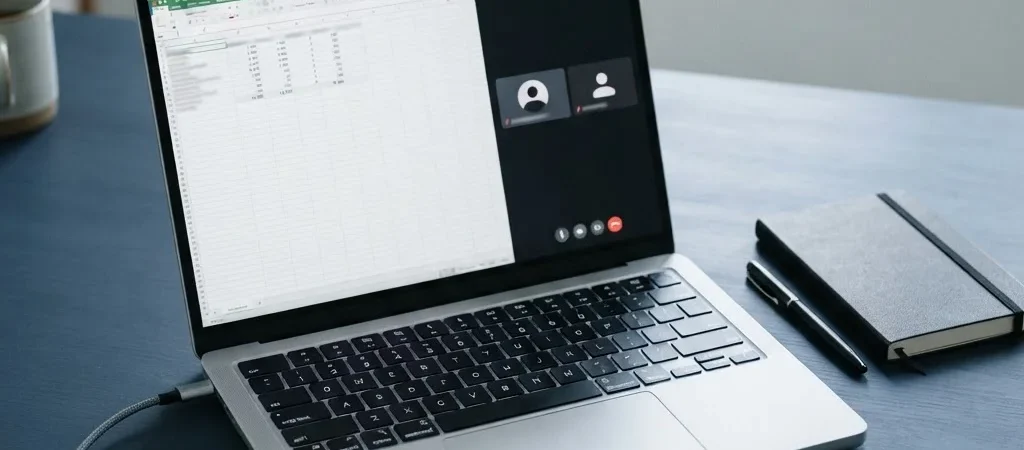
The laptop that feels fast while opening a document may slow down once a video call, a large spreadsheet, and several browser tabs are all running. That’s why a processor name on its own rarely settles a buying decision. Start with your regular workload, then compare the parts that affect it.
Match Performance to Work
For email, writing, browsing, and video calls, prioritize a balanced configuration and a comfortable keyboard over specifications aimed at demanding creative or technical work. If you routinely edit large media files, work with complex projects, or use specialized software, check that the processor, memory, and graphics configuration meet that software’s requirements. The point is not to buy the biggest numbers; it’s to avoid paying for capacity your routine won’t use.
Memory can matter when several applications stay open at once, while storage affects how much you can keep locally and how much room remains for large projects. Compare the exact configurations being reviewed, not just the laptop family name: one line may be sold with notably different components. Reviews are most helpful when they describe multitasking or sustained workloads rather than relying only on a brief benchmark.
Don’t Ignore the Chassis
A laptop’s screen, keyboard, ports, and weight shape every workday. If you carry it between home and an office, compare its dimensions and weight, then check whether it has the ports you regularly use for a monitor, storage drive, or headset. For long writing sessions, keyboard layout and screen comfort may matter more than a small difference in processor performance.
Battery claims are best treated as a starting point, since brightness, video calls, and demanding applications can change how long a laptop lasts away from an outlet. Look for reviews that explain the test conditions and compare like with like. Smart Reviews may earn a commission if you buy through affiliate links in an article; our recommendations should still make clear which compromises matter for each kind of user.